|
Lately I have seen an increase in the amount of call I get from people, who want to train their own service dogs. The majority of these calls are from people suffering from anxiety and depression who have heard or have been recommend to get a dog to take with them out in the public to help them overcome whatever internal obstacles , they may encounter.
First of all , let me say, I am all for having a dog as a companion and many studies have shown the powerful effect dogs can have on our internal state and well being. They calm us, give us confidence and aid when needed. This is one of the many reasons to why we have service dogs (for people with epilepsy, Aspergers, Autism, Diabetes to just mention a few) and Comfort dogs (formerly know as Therapy dogs). Because we as humans responds to dogs in a very positive way, both mentally, as well as physically and the connection humans and dogs can have (two very different species ) is awesome and beautiful! Knowing this, people might choose to adopt a dog hoping and expecting it to become their own personal service dog. But this is where my concern comes in and why this topic needs to be addressed. Without getting into too many details about the difference, a service dog is a dog that has been specially chosen due to its temperament and will go to a certified school for a minimum of 2 years , where he still might be rejected for not living up to the standards. There is a lot of time, money, training and commitment put into these dogs, so someday they can go to a home and make a difference for someone who needs them. That is a service dog - and that is the service dog wearing the service dog vest and therefore allowed into every store! A Comfort dog (Therapy dog) is a privately owned dog who has taken the tests necessary to become a registered Comfort Dog. These are the dogs you see in school, nursing homes, hospitals and so on. The dog you have chosen to help you overcome your anxiety and depression is neither one of the two mentioned above. People tend to call them service dogs, which they are not. But truly it seems to be a bit of a gray area, so for now I will just call it a Personal Aid (PA) dog. When I get the call about the PA dog, I see failure from the get go. The people calling have often not done their research about temperament and about the commitment and training needed, but instead just adopted, rescued or bought a dog that looked cute or simply because a friend had one. In their mind is going to be dog for themselves or a family member, that can help detect a panic or anxiety attack and it needs to go with them everywhere. So when I get called out to a five or eight months old dog, that has no skills, never been socialized, live outside in a kennel because "he is too strong and too much to handle" , and I listen to the expectations the family has for this dog, it is really hard for me to not get mad and frustrated. You are setting yourself and the dog up to failure! Having a dog means being a responsible dog owner, who is committed and ready to put in the hours needed to properly train and socialize the dog in order to give the dog the best skills and foundation needed in order to live in our world with the minimum amount of stress. That foundation in itself is hard work BUT if then you also want the dog to be able to handle stressful environments, such as grocery stores, farmers market, post office and more, you have to understand , that with these additional requirements, you need to put in the extra work. And still nothing is guaranteed. Your dog might have a temperament which will never allow it to go with you in public. Please know that this post comes from a place, where I just want to see dogs be successful. It is not lashing out but more a plea for you to understand, that you cannot put all these expectations on your dog if you are not willing to put in the work yourself. If you are willing to put in the work, I will be more than happy to help you put a training plan together. As I said, dogs are amazing and the bond they allow us to have with them is beautiful and honest. But be fair and choose a dog based on realistic expectations in regards to your level of commitment. And if you don't have the time, don't get the dog.
17 Comments
We all know the importance of training our dogs. Training them at home as well as outside the home, helps make them more acquainted to our environment and our expectations while learning the behaviors needed to be successful in our everyday situations.
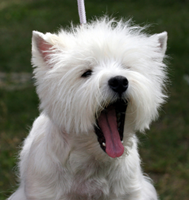
But among all the training exercises and your work schedule, do you remember to sometimes just get on the floor and play and roll around? Or to just get on the floor to sit with your dog and just pet him or give a little massage? I feel, that whenever I remember to take the time to sit down or roll around on the floor with my dogs, I can get a better sense of their mental state and well being. Will Cedar let me mess with his sensitive paws today or does he instantly feel the need to mouth my hand? Is Jackson in the mood to play or is he too tired or too sore, and just need a belly rub. Getting on the floor, helps me feel connected with my dogs again - something which is often forgotten during the everyday routines of getting kids ready for day care, work, making dinner, getting kids ready for bed and so on. So my advice to you is, get on the floor and get connected with your dog. Believe me, you will both appreciate it......and be thankful you did, when some day you will no longer to able to do so. Because it is when we stop and connect with loved ones, being children, spouse, family, friends or in this case our dogs, we make the memories we will forever be thankful for. Even though dogs have domesticated and living with us for thousands and thousands of years, many of us still don't know how to "listen" to what our dogs are telling us. Dogs "talk" a lot with their bodies but unfortunately we are often lacking the knowledge and tools to understand, which then again lead to escalated situations and behavioral issues, which otherwise could have been prevented. As a dog trainer, one of my essential goals is to help the communication getting more clear between dog and owner. I truly believe that the more we educate ourselves in dog language , the easier our lives will be living with a dog, which will increase the quality of life -for both dog and owner. Doggone safe has a lot of helpful information about stress signals on their website. The information below is copied from their page Signs of Anxiety. Important information which should be part of any basic dog training class, so it can become more common knowledge. Signs of Anxiety These signs indicate that your dog is uncomfortable with the current situation and there is a need for intervention to prevent pushing the dog to the point of biting, and to make sure your canine friend is happy and not feeling anxious. Please remember: It is a GOOD THING that a dog shows you that he is anxious or uncomfortable, rather than going straight to a bite. Never punish a dog for showing that he wants to be left alone by growling, leaving the situation or demonstrating more subtle signs. If you punish a dog for growling or breaking a stay to get way from a child you might suppress the warning or avoidance behavior and he might just bite without warning first the next time. The dog still feels exactly the same way about the child bothering him, but now he has no way to show it and no way out of the situation. Be glad if your dog gives a warning and take steps to modify the behavior of the child, condition the dog to enjoy the child and create safe spaces for both dog and child. See the parent information page and the dog owner information page to find out how to do this. One Paw Raised (see photo below) This is very cute but the dog is not happy and does not want to be petted or bothered. She is worried. Half Moon Eye (see photo below) The dog just wants to be left alone. Watch for this one when kids are mauling the dog. This is a common expression in dogs that being hugged. If you see the half moon eye when the kids approach the dog or are interacting with the dog, it's time to intervene and give them all something else to do. Displacement Behaviors (see photo below) Displacement behaviors are normal behaviors displayed out of context. They indicate conflict and anxiety. The dog wants to do something, but he is suppressing the urge to do it. He displaces the suppressed behavior with something else such as a lick or a yawn. For example, you are getting ready to go out and the dog hopes to go too. He is not sure what will happen next. He wants to jump on you or run out the door, but instead he yawns. The uncertainty of the situation causes conflict for the dog and the displacement behaviors are a manifestation of that conflict. The dog may want to bite a child who takes his bone, but instead he bites furiously at his own foot. Some examples of displacement behaviors include
These are all things that dogs do anyway. It is important to look at the context to determine whether the dog is feeling anxious. For example: if it is bedtime and the dog gets up, stretches, yawns and goes to her bed, then that yawn was not a displacement behavior. If the kids are hugging the dog or lying on him and he yawns or starts licking at them over and over then this is displacement. He wants to get up and leave or even to bite, but he displaces that with yawning or licking them or himself. In this context the licking or yawning behavior tells you that the dog is uncomfortable with whatever the kids are doing and it is time for you to intervene. You must then either prevent the kids from doing this in the future or use positive training techniques to teach the dog to enjoy (not just tolerate) these actions from the kids. Visit the dog owner information page for advice on how to do this. Avoidance Behaviors Sometimes dogs are more overt when they feel anxious and want to remove themselves from a situation. Please don't force a dog to stay in situation in which he feels anxious, especially if children are the source of his anxiety. Here are some examples:
Other Body Language Signs of Anxiety
All dogs should have a safe place, such as a crate or mat that they can go to when they want to be left alone. All family members and guests should be taught not to bother the dog when he is in his safe place. We have recently heard of a mat product which gives the dog a shock if he tries to leave it, thus teaching him to stay on the mat. This is not what we would consider a safe place for the dog. This is a dangerous product and you should not have one of these. After reading about how a dog shows he is anxious and stressed, please see video below. Thank God for a very patient and tolerant dog or this child would have been bitten and dog most likely euthanized even though it was sending A LOT of signs saying "Hey, I don't like this" and even tried to walk away. Education is important in order for us to coexist with a different specie so we can communicate and 'listen' to each other . This wil help promote a relationship based on trust and respect , which is ultimately my goal with any relationship, man or animal. The AKC GoodDog!℠ Helpline team has shed some light on top questions from real dog owners and why finding a solution to these training troubles is key. Don’t delay! Tackle common training troubles with your pup today.
#5 – LEAVE IT One of the most useful and versatile commands, Leave It can be used indoors and out. Whether you are on a walk with other dogs or just trying to get your shoe back, these two words will help you teach your dog what is and is not appropriate to put in his mouth. #4 – WALKING WITH A LEASH Does a walk with your dog resemble the Iditarod, or is it a stroll in the park? Walking on a Loose Leash makes outings more pleasurable for you and your dog. #3 – COME What do you do when your dog runs out of the door or gate and heads directly toward the road? Come is the first word out of your mouth. Does your dog listen and consistently return to you? Or could you illicit anEmergency Stay while you go get them? #2 – JUMPING ON GUESTS Since dogs are social animals, they often become overly excited when greeting humans. Jumping on People is one of the most common problem behaviors. Teaching a dog how to politely greet visitors increases the likelihood of social interaction and inclusion. And in the number 1 slot… #1 – POTTY TRAINING Potty Training a new puppy is the number one question asked by Good Dog Helpline callers. What is a reasonable age to expect a puppy to be housebroken? How do you get your dog to let you know when he needs to go out? If you have any questions on how to teach your dog these 5 commands, please don't hesitate to call me today at (406) 679-3826. With this blog , I hope to educate dog owners about the science behind dog training by posting articles, which I find to be well documented, easy to understand and implement in your daily life with your dog and thereby hopefully take out any "mystery" as some people like to portray in the media. There is no mystery or secrets and special "whisper" talents you need to posses when wanting to train a dog. What you need, is a open mind and a willingness to learn from your furry companion and an understanding, that knowledge is your friend. Study, become familiar with the science behind behaviors and come from a place of respecting the individual specie, and you are on your way to learn more about life than just dog training !
|